4 min
4 min
Food security has become a strategic priority across the GCC as structural constraints continue to
expose the region’s food industry to supply-side risks. Heavy import dependence, climate stress,
fragile logistics networks, global economic uncertainty, and rising food waste are collectively
reshaping the risk profile and capital requirements of the sector, while also opening avenues for
targeted investment.
Import Dependence and Exposure to External Shocks
The GCC relies on imports for approximately 85% of its food requirements, including about 90% of
cereals and nearly all rice. This dependence limits pricing power and exposes the region to
geopolitical disruptions, supplier-country export restrictions, and inflationary pressures. Events such
as India’s 2023 ban on non-basmati rice exports and ongoing geopolitical conflicts have highlighted
the region’s limited control over its food supply chains, reinforcing the importance of supply security as
an investment consideration.
Climate Constraints and Resource Limitations
Harsh climatic conditions including high temperatures, low rainfall, scarce arable land, and limited
freshwater resources severely restrict conventional agriculture. Arable land across the GCC remains
below 3% in most countries. As of 2022, Bahrain had the highest share of arable land at 2.7%,
followed by Qatar at 1.8%. While Saudi Arabia has a large agricultural land footprint at 80.8%, only
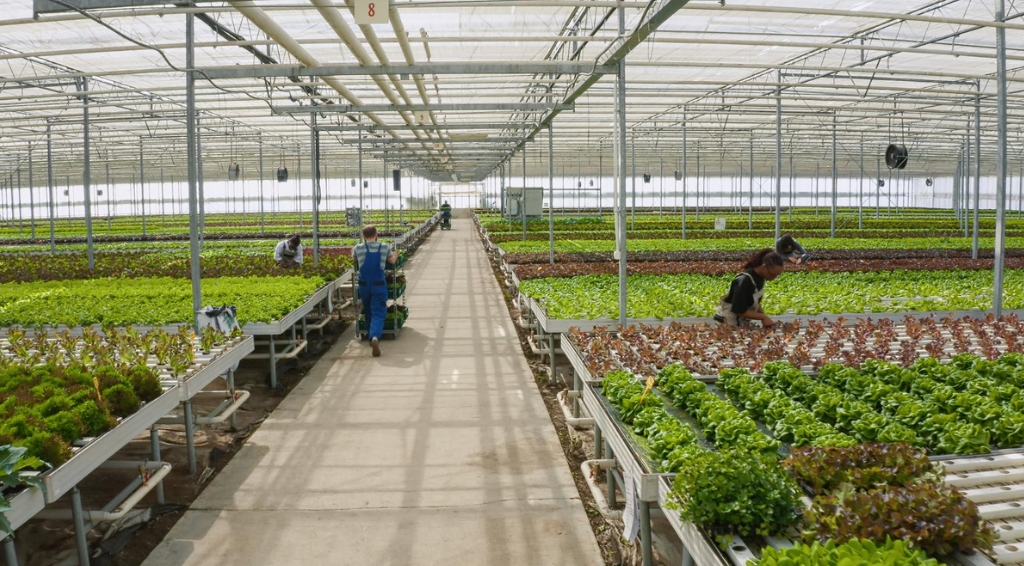
1.6% is arable. Addressing these constraints requires sustained capital deployment into controlled
growing environments.
Fethi Khiari, CEO, United Foods Company says, “The GCC’s arid environment and limited
arable land present ongoing challenges. To mitigate this, governments and private sector
players are investing in technologies such as hydroponics, vertical farming, automation, and
precision agriculture.”
Water scarcity remains a critical constraint. Saudi Arabia, the UAE, Kuwait, and Qatar rank among the
world’s largest producers of desalinated water. Desalination supplies 90% of Kuwait’s drinking water,
86% in Oman, 70% in Saudi Arabia, and 42% in the UAE, where plants produce over 7 million cubic
meters per day. Collectively, GCC desalination capacity stands at approximately 67 million cubic
meters per day, accounting for 45% of global seawater desalination capacity. These characteristics
increase operating costs but also support long-term investment demand in water infrastructure,
energy-efficient systems, and agri-technology solutions.
Fragility in Supply Networks and Infrastructure Investment
GCC food imports transit through critical maritime chokepoints such as Bab al-Mandab, the Strait of
Hormuz, and the Suez Canal, making supply chains highly sensitive to geopolitical tensions.
Approximately 39% of wheat and coarse grain imports pass through Bab al-Mandab, while 35%
transit via the Strait of Hormuz. The Strait of Hormuz alone accounts for 81% of the GCC’s rice
imports, primarily sourced from India. Disruptions along these corridors increase freight costs, delay
shipments, and add volatility to food prices.
As per Kesri Kapur, Group CEO of Americana, “Food manufacturers and distributors are
contending with a complex set of pressures on the supply side. Price volatility in global
commodities, evolving import dynamics, and currency fluctuations are forcing procurement
teams to diversify sourcing strategies and renegotiate supply contracts more frequently”.
GCC governments are increasing investments in cold chain logistics, port infrastructure, and digital
solutions such as IoT, blockchain, and AI to improve traceability and transparency. Projects such as
the UAE’s US$150 million expansion of Jebel Ali Port and the proposed GCC Railway illustrate a
broader push to strengthen logistics resilience, creating investment opportunities across infrastructure
and supply-chain platforms.
Food Waste and Efficiency Losses
While import dependence remains high, food wastage has emerged as a parallel issue across the
GCC. On average, Gulf countries waste around 150 kilograms of food per capita annually—14%
above the global average. Saudi Arabia alone discards approximately 4 million tons of food each year.
Much of this waste occurs along the supply chain and at the consumer level, where cultural norms of
hospitality, overpreparation, and buffet dining contribute significantly, especially during Ramadan. In
the UAE, 38% of food produced in the hospitality sector goes to waste, resulting in economic losses
exceeding US$3.5 billion annually.
The combination of heavy import dependence and excessive food waste not only strains national
budgets and food security but also worsens environmental challenges. The water wasted due to food
loss is about 790m³/capita/year in the UAE. This contributes to the severe water stress throughout the
Gulf, aggravating long-term sustainability and the need for greater investment in water management.
Conclusion
The GCC food industry faces a complex set of challenges rooted in environmental constraints, import
dependence, fragile supply chains, global economic uncertainty, and high levels of food wastage.
Addressing these issues requires sustained investment in agritech, infrastructure, water management,
and supply chain resilience, alongside systemic efforts to reduce inefficiencies and waste. As food
security continues to rise in strategic importance, the ability of the GCC to navigate these structural
challenges will remain critical to long-term supply stability and sustainability.


 4 min
4 min