5 min
5 min
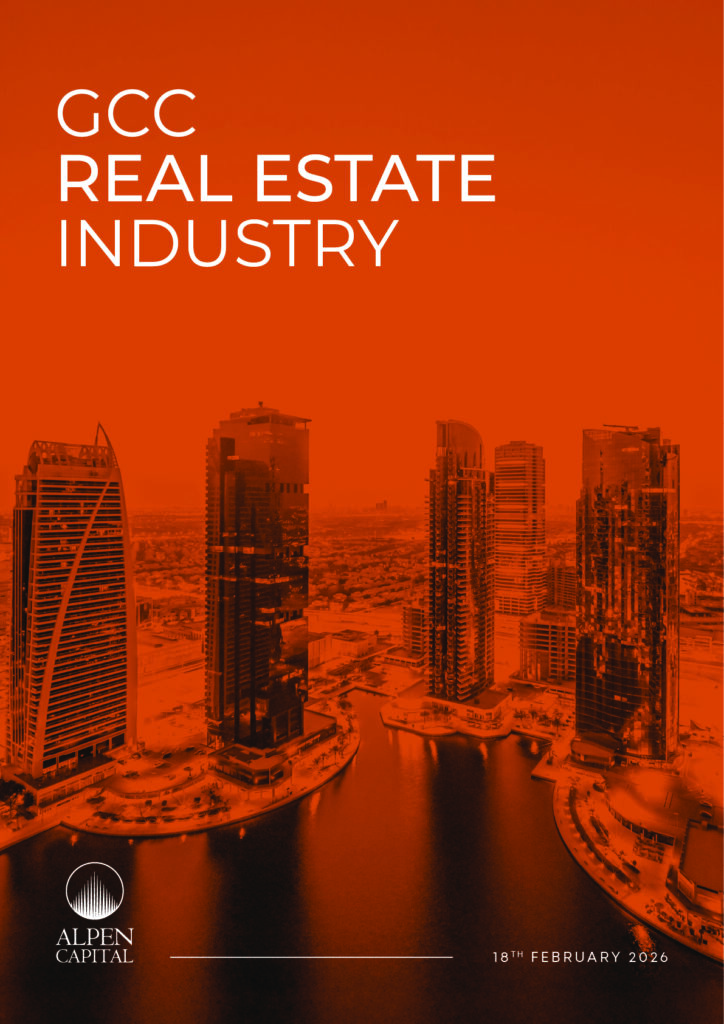
Alpen Capital’s maiden report on the GCC real estate industry highlights a market that has evolved rapidly from a regional growth story into a global investment destination. Backed by economic diversification, regulatory reforms, strong demographics, and large-scale development, the GCC real estate sector continues to attract institutional and international investors alike.
PNC Menon, Founder of Sobha Group states that, “In 2024 GCC real estate transactions soared past US$383 billion, lifting the region’s volume by around 25 % year-on-year. In the first quarter of 2025 alone, the region recorded roughly US$78.2 billion in real-estate deal value, up 20-22 % from the same period last year.”
Alpen Capital estimates residential housing stock across the GCC to increase from 5.52 million units in 2025 to 6.43 million units by 2030, while commercial office supply is expected to grow from 33.3 million sqm to 41.0 million sqm. These figures underscore the scale of development and investment opportunities emerging across the region.
Regulatory Reforms Driving Investor Confidence
One of the major reasons global investors are increasingly allocating capital to the GCC real estate, despite the economic and geo-political uncertainties, is the region’s commitment to creating a transparent, accessible and investor-friendly market. Implementation of reforms including liberalisation of foreign ownership, strengthening of investment frameworks and enhanced tenant protection are improving market liquidity and encouraging long-term foreign participation. The outcome has been a market that balances near-term demand stability with long-term investment appeal. Consequently, a surge in transaction activity has been recorded, particularly in Dubai, wherein residential real estate transaction values grew more than eight times from US$14 billion in 2019 to approximately US$115 billion in 2024.
Investor protection laws and regulatory transparency are also significantly aiding investor confidence. In Saudi Arabia, the enactment of the Law of Real Estate Ownership by Non-Saudis in July 2025 marks a major milestone in liberalizing property ownership for foreign investors. The law permits non-Saudi individuals, corporations, and non-profit entities to own, lease, or develop properties in Riyadh, Jeddah and Dammam.
The UAE has further reinforced its position by linking ownership thresholds with long-term residency and Golden Visa eligibility, transforming Dubai into a global hub where international buyers now account for more than half of the transactions. Such measures are reducing barriers to entry and transforming the real estate industry into a global asset class.
Diversification Agendas Aiding Real Estate Development
As the region reduces its dependence on hydrocarbons, governments continue to channel investments into various sectors including tourism, logistics, and infrastructure, creating demand across all the real estate segments. UAE is solidifying real estate as a cornerstone of its economic diversification agenda, with Dubai recording 49,606 property transactions Q2 2025, a 22% increase compared to the same period last year. Furthermore, the golden visa program has been instrumental in deepening investor participation, while projects such as Masdar City highlight UAE’s focus on integrating sustainability and technology within the sector.
In Saudi Arabia, real estate and construction expanded by 7.8% y-o-y in 2024, reflecting strong growth momentum. Mega-projects such as NEOM, Qiddiya, and the Red Sea Project are creating large-scale demand for residential, commercial, and hospitality assets. Infrastructure developments such as the Riyadh Metro and King Salman Park are also improving connectivity and urban livability, further stimulating property demand. Other GCC markets are also advancing their diversification objectives through real estate development, though at varying scales. This momentum in the region’s real estate sector, supported by economic diversification initiatives and strong government backing, is attracting investors seeking opportunities in a growing market.
Healthy Rental Yields Reinforcing Market Appeal
The GCC real estate industry has maintained a stable rental yield and long-term capital appreciation as compared to other comparable markets, making it increasingly appealing to both domestic and international investors. In Saudi Arabia, prime office assets generated rental yields of 7.5%–8.5% in 2024, while upgraded Grade B properties offered even higher returns of 8%–9%, reflecting strong demand from multinational corporations establishing regional headquarters in Riyadh and Jeddah. Parallelly, residential rental yields of around 7.7% in 2024 and 7.3% in 2025 were recorded, driven by robust demand in Riyadh and Jeddah.
With regards to UAE, prime office yields stood at 6%–7% in Dubai and around 7% in Abu Dhabi, supported by sustained demand from international businesses, financial institutions, and government entities. While heightened investor interest has compressed yields for Grade A assets, Grade B offices continue to offer returns of up to 9%, prompting investors to pursue refurbishment and repositioning strategies. Looking at the residential segment, rental demand has remained resilient, with apartment yields averaging around 7% in 2025 and select communities generating returns of up to 8.9%. These evolving yield dynamics are steering investor capital towards value-add and repositioning strategies, rather than pure new-build acquisition.
Conclusion
The pace of activity in the GCC’s real estate sector, coupled with government efforts to increase the sector’s contribution to economic growth, has maintained strong investor confidence over the years. Healthy returns across the residential, commercial, and other real estate segments have further strengthened the market’s appeal. At the same time, the broad range of regulatory reforms being implemented to safeguard the investors and end users is enhancing market transparency and governance, thereby encouraging greater participation from foreign investors in the GCC’s real estate industry.


 5 min
5 min